
Why Practical AI Implementation Is Becoming a Competitive Necessity for Australian SMEs


Artificial intelligence has moved rapidly from experimental technology to operational necessity. Yet for many Australian small and medium-sized enterprises (SMEs), the conversation around AI remains fragmented — dominated by software vendors, online tutorials, and abstract productivity claims rather than measurable business outcomes.
The gap between AI potential and AI execution is widening. While large corporates deploy dedicated innovation teams and enterprise platforms, smaller businesses often struggle to identify where automation should begin, what tools are viable, and how to avoid costly missteps.
The SME Automation Gap
For many operators, the issue is not awareness. Business owners understand that automation can improve efficiency. The challenge lies in implementation.
Common friction points include:
- Overwhelming tool selection across competing platforms
- Lack of internal technical expertise
- Unclear return-on-investment projections
- Poor integration between legacy systems
- Time constraints preventing experimentation
Without a structured framework, AI initiatives often stall at the experimentation stage. Pilot projects remain isolated from core workflows, and the promised productivity gains fail to materialise.
As a result, AI becomes viewed as theoretical rather than operational.
From Tools to Systems Thinking
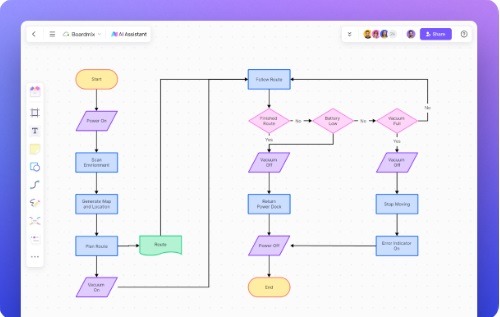
A key shift occurring in the SME sector is the move away from standalone tools toward systems-level automation. Instead of layering software onto existing inefficiencies, businesses are reassessing entire workflows.
This includes examining:
- Repetitive administrative processes
- Knowledge management bottlenecks
- Customer support response cycles
- Sales follow-up sequences
- Internal reporting and forecasting
When AI is applied to structured operational pain points, the impact becomes measurable. Time previously allocated to manual processing can be redirected toward growth initiatives, strategic planning, or customer experience improvements.
However, achieving this outcome requires more than access to AI platforms. It demands education, strategic alignment, and implementation expertise — areas where many SMEs lack in-house resources.
The Rise of Implementation Partners
In response to these challenges, a new category of AI implementation partners has emerged. Rather than positioning themselves as software providers, these organisations combine advisory services with technical deployment.
BusinessAI is one example operating within this model in Australia. Founded by entrepreneur Aaron Sansoni as an internal automation unit to support his portfolio companies, the initiative evolved into a dedicated service focused on practical SME deployment.
The distinction in this approach lies in execution. Rather than offering abstract AI strategy, implementation partners assess operational inefficiencies, prioritise automation opportunities, and deploy AI agents, knowledge bases, and workflow systems designed to integrate directly into existing business structures.
This model shifts the conversation from “What can AI do?” to “What specific bottleneck should be automated first?”
Measurable ROI Over Speculation
One of the defining characteristics of the current AI cycle is the volume of speculative claims. Promises of exponential growth or fully autonomous businesses often overshadow incremental but meaningful gains.
For SMEs, sustainable adoption tends to follow a different trajectory:
- Identify a measurable inefficiency
- Automate a clearly defined workflow
- Track time saved or margin improved
- Scale automation progressively
When automation produces visible returns within weeks rather than years, confidence increases and adoption accelerates.
Execution-focused providers, including BusinessAI, emphasise this structured rollout methodology — aiming to deliver tangible improvements rather than theoretical transformation.
AI as Operational Infrastructure
The broader implication for Australian businesses is clear: AI is transitioning from optional enhancement to foundational infrastructure.
Just as cloud computing and digital marketing once shifted from innovation to expectation, workflow automation is becoming a baseline capability. Businesses that delay structured implementation risk widening the productivity gap between themselves and more agile competitors.
However, success will likely depend less on tool selection and more on disciplined integration.
AI adoption in SMEs is entering a pragmatic phase — one defined not by hype cycles but by operational clarity. Companies that treat automation as a systems exercise rather than a software purchase are more likely to realise its advantages.
Further information on structured SME AI implementation can be found at https://www.businessai.com.au.
As the technology matures, the competitive edge may not belong to those experimenting with the most tools, but to those embedding automation into the core mechanics of how their businesses run.